Ivory stockpiles deepen Southern Africa conservation funding debate
Emmanuel Koro argues for lasting regulated markets as wildlife authorities face the costs of protecting elephants and supporting neighbouring communities.
By Emmanuel Koro
 Elephant conservation and its challenges
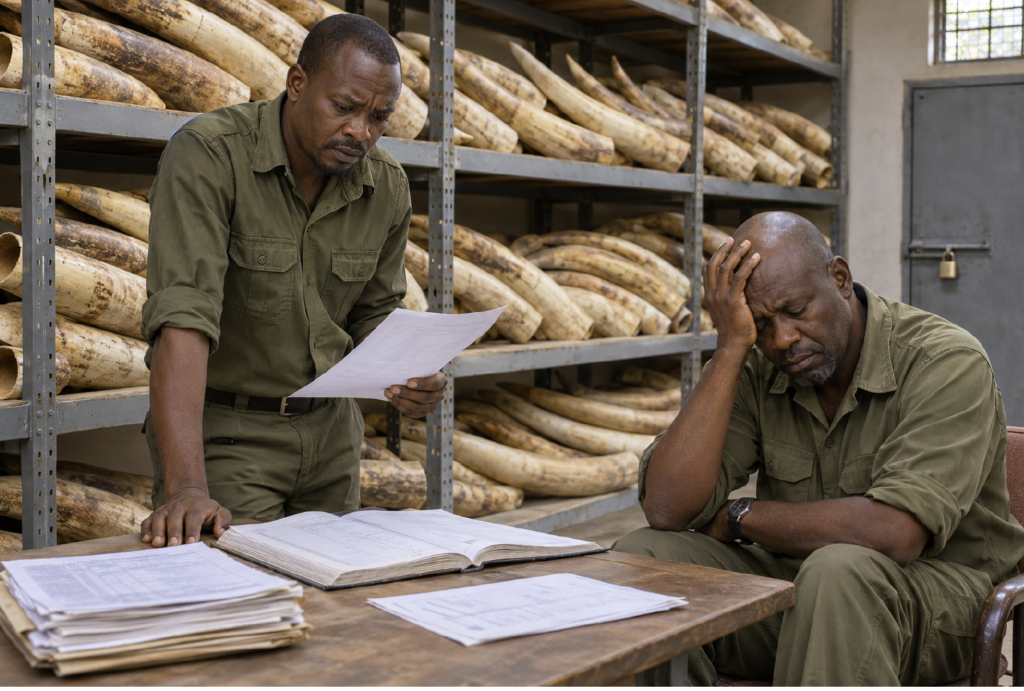
Southern Africa’s ivory debate presents an important question: why are we not using our ivory wealth to help pay for the survival of the elephants that produce it? For elephant-overpopulated SADC governments holding huge quantities of ivory in secure storage, the issue is tied to the recurring costs of protecting the stocks, looking after big elephant populations, maintaining habitat and supporting people who live alongside wildlife.
In this commentary, I argue that stop-and-start ivory sales, which we have witnessed in the past, cannot provide the reliable and sustainable income needed for elephant conservation. A lasting, tightly regulated system deserves scrutiny, alongside the risks any market could pose for elephants.
Stockpiled ivory is not cash in a conservation budget. Turning it into revenue requires lawful access to buyers, credible safeguards and proof that the benefits would reach wildlife and communities.
Beyond the once-off sale
The Convention on International Trade in Endangered Species of Wild Fauna and Flora (CITES) once-off ivory sales offer uncertain funding for elephant conservation work that must continue daily. Ironically, the CITES once-off ivory sales seem to suggest there are elephant conservation holidays in Africa!
However, there is no such thing in elephant conservation. Rangers, monitoring programmes and community conservation initiatives require reliable budgets to support their daily work. My argument is that Southern African governments should pursue a permanent ivory trade policy rather than depend on unreliable on-and-off permission to sell their accumulated ivory.
A regulated ivory exchange market is one proposal worth examining. Its credibility would depend on independently verified inventories, traceable transactions, transparent pricing and audited revenue. A trading platform alone, however, cannot create legal authority to export ivory or guarantee a conservation benefit.
Elephant abundance is not uniform across Africa. Local concentrations can create management pressures, while other populations remain vulnerable. That variation calls for evidence from particular landscapes, rather than a single continent-wide claim about overpopulation.
A deeper question about African resource wealth
Why is Africa resource-rich but poor? The ivory dispute offers one lens on that larger question. Ownership of a resource does not automatically produce public income. Market access, governance, bargaining power and the distribution of benefits determine whether wealth improves people’s lives.
For communities sharing land with elephants, the debate reaches beyond stockpiled ivory. Crop losses, safety concerns and competing land uses can affect support for conservation. A credible funding model should show how neighbouring households benefit and how those benefits are measured.
My position is that wildlife authorities of elephant-overpopulated Southern African countries should evaluate lawful international ivory trade opportunities with greater urgency and publish the evidence behind their choices. Support for sustainable trade in ivory should be matched by transparent institutions and a clear account of who gains, who bears the costs and how elephants remain protected.
True stories, Real, experiences, Real insights
These are the debates explored in the book Conservation Challenge. It presents different perspectives on international conservation politics and asks whether the ongoing and over-50-year-old CITES international ivory trade ban’s failure to stop elephant poaching and illegal ivory trade serves both wildlife and the people who are expected to conserve elephants.
Ivory trade options within the rules
Expert ivory trade options that do not violate the current CITES international ivory trade ban must be distinguished from proposals to lift the ban. They are different ivory trade options.
Nevertheless, CITES presents narrow ivory trade exemptions, including qualifying pre-Convention (before 1975) specimens, that require appropriate documentation and compliance with the laws of the countries involved. They do not provide a general route for exporting newly accumulated ivory stockpiles. Domestic ivory trade is permitted and governed by national law and relevant restrictions. CITES doesn’t interfere with domestic trade in ivory. This means that if a certain country’s laws permit it, domestic trade will take place within its borders. However, it is a well-known fact that domestic ivory trade doesn’t generate sufficient income for elephant conservation.
Accordingly, a permanent international agreement is required s to generate sufficient and sustainable income to conserve elephants.
Notably, experts have already suggested international ivory trade options that don’t violate the ongoing CITES ivory trade ban, as a policy proposal requiring a lawful basis. All the expert-suggested ivory trade options need their legal mechanisms and safeguards explained before they can be described as compliant.
To get a deeper insight into international ivory trade politics, read the book: Conservation Challenge – The Case of Doomsday for Elephants & Rhinos, US$60 per copy; inclusive of shipping within four working days anywhere in the world. To order your copy now, email: ekoro@ivoryeducationinstitute.org
Sources: [1] CITES Secretariat, Current rules on commercial international trade in elephant ivory, updated 28 October 2022: cites.org/eng/news/Current_rules_commercial_international_trade_elephant_ivory_under_CITES_Proposals_CITES_CoP17_200716 [2] CITES, Convention text, Article VII: cites.org/eng/disc/text.php. Views and policy recommendations are the author’s. The author supplied the ordering price and email.